
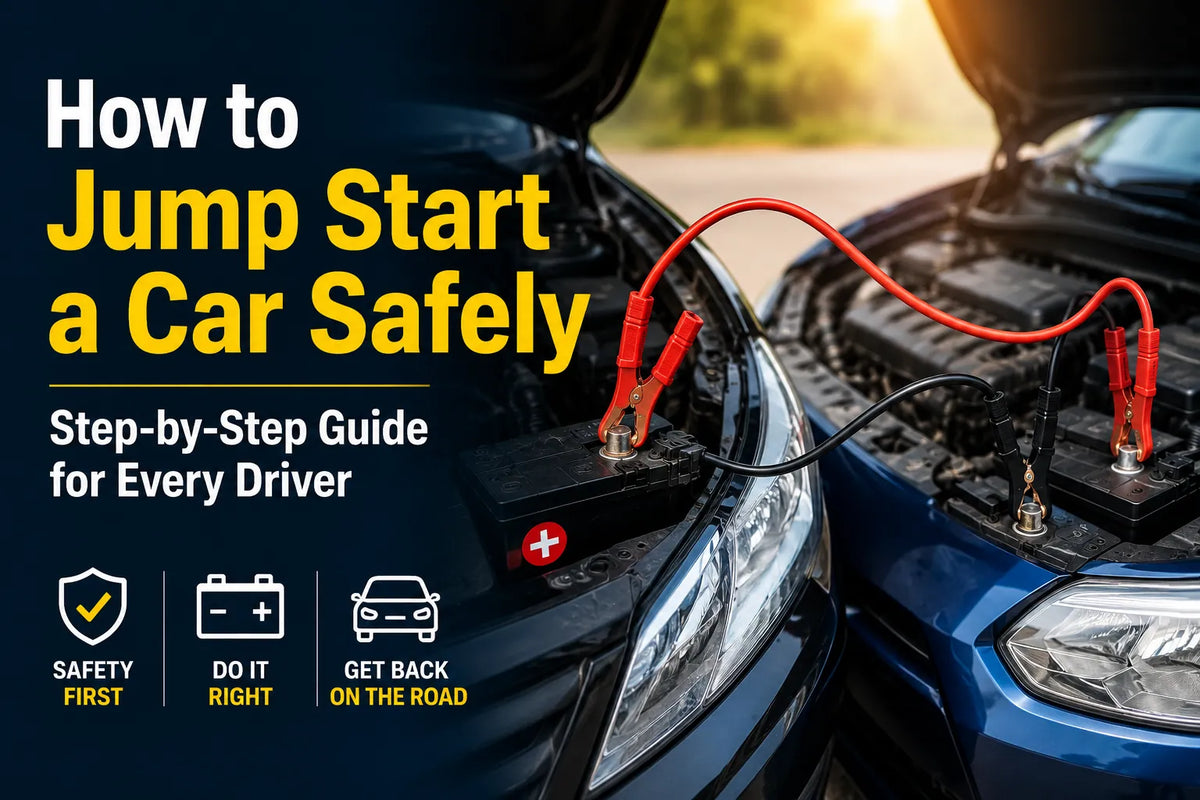
June 05, 2026 · Marco Groessler
Why Cars Need Jump Starts
A dead battery is one of the most common reasons vehicles fail to start.
Common causes include:
-
Leaving headlights on
-
Interior lights left running
-
Extreme temperatures
-
Old battery age
-
Alternator problems
-
Long periods of inactivity
-
Electrical drains
A jump start temporarily provides enough power to start the engine, but it does not fix the underlying cause.
Understanding why the battery became discharged is critical.
What You'll Need
There are two common methods.
Option 1: Jumper Cables and Another Vehicle
You'll need:
-
Jumper cables
-
A vehicle with a healthy battery
-
Safety gloves
-
Eye protection
Option 2: Portable Jump Starter
You'll need:
-
Fully charged jump starter
-
Safety equipment
Portable jump starters are increasingly popular because they eliminate the need for a second vehicle.
Before You Start
Take a moment to inspect the battery.
Do not attempt a jump start if you notice:
-
Cracked battery casing
-
Battery leaks
-
Swollen battery housing
-
Excessive corrosion
-
Burning smell
A damaged battery may create serious safety risks.
If any of these conditions are present, replace the battery instead of attempting a jump start.
Understanding Battery Terminals
Every battery has two terminals.
| Terminal | Symbol | Color |
|---|---|---|
| Positive | + | Red |
| Negative | - | Black |
Always verify terminal markings before making connections.
Connecting cables incorrectly can damage electrical systems and electronic components.
How to Jump Start a Car Using Jumper Cables
Step 1: Position Both Vehicles
Park the donor vehicle close enough for the cables to reach.
Do not allow the vehicles to touch.
Turn off:
-
Engines
-
Lights
-
Radios
-
Climate controls
Apply parking brakes on both vehicles.
Step 2: Connect the Positive Cable
Take the red cable.
Connect:
-
One red clamp to the positive terminal of the dead battery
-
The other red clamp to the positive terminal of the donor battery
Double-check the connection.
This is the most important step.
Step 3: Connect the Negative Cable
Take the black cable.
Connect:
-
One black clamp to the donor battery's negative terminal
-
The remaining black clamp to a clean metal grounding point on the disabled vehicle
Examples include:
-
Engine block
-
Unpainted chassis metal
-
Designated grounding point
Avoid attaching the final connection directly to the dead battery whenever possible.
Step 4: Start the Donor Vehicle
Start the donor vehicle.
Allow it to idle for several minutes.
This allows current to flow into the discharged battery.
Many people rush this step and attempt to start the disabled vehicle too soon.
Patience increases success rates.
Step 5: Start the Disabled Vehicle
Attempt to start the vehicle with the dead battery.
If it starts:
-
Let it idle
-
Leave cables connected briefly
If it does not start:
-
Wait a few more minutes
-
Try again
Avoid repeated cranking attempts.
Excessive cranking can overheat the starter motor.
Step 6: Remove the Cables
Disconnect in reverse order.
-
Remove black clamp from grounded metal
-
Remove black clamp from donor battery
-
Remove red clamp from donor battery
-
Remove red clamp from revived vehicle
Keep clamps from touching each other.
How to Use a Portable Jump Starter
Portable jump starters simplify the process.
Step 1
Turn off the vehicle.
Step 2
Connect:
-
Red clamp to positive terminal
-
Black clamp to negative terminal
Step 3
Power on the jump starter.
Step 4
Start the vehicle.
Step 5
Disconnect the jump starter immediately after the engine starts.
Always follow manufacturer instructions for your specific jump starter model.
Jumper Cables vs Portable Jump Starters
| Feature | Jumper Cables | Jump Starter |
|---|---|---|
| Requires Another Vehicle | Yes | No |
| Emergency Convenience | Moderate | Excellent |
| Portable | Limited | Excellent |
| Cost | Lower | Higher |
| Roadside Independence | No | Yes |
For most drivers, a portable jump starter provides greater convenience and emergency preparedness.
What to Do After a Successful Jump Start
Many drivers make a critical mistake.
They shut off the vehicle immediately.
After a successful jump start:
-
Drive for at least 20–30 minutes
-
Avoid unnecessary electrical loads
-
Monitor dashboard warning lights
However, driving alone may not fully recharge a deeply discharged battery.
A dedicated battery charger is often the better solution.
Why the Battery Died
A jump start gets the engine running.
It does not explain why the battery failed.
Common causes include:
Old Battery
Most batteries last 3–5 years.
Faulty Alternator
The alternator may not be charging properly.
Parasitic Drain
Electrical components may continue drawing power when the vehicle is off.
Extreme Temperatures
Heat and cold accelerate battery deterioration.
Signs You Need a New Battery
Consider replacement if:
-
Battery is more than five years old
-
Vehicle requires frequent jump starts
-
Battery fails load testing
-
Engine cranks slowly
-
Voltage repeatedly drops below healthy levels
Repeated jump starts are usually a warning sign rather than a solution.
Common Jump Starting Mistakes
Reversing Cable Polarity
This can cause expensive electrical damage.
Always verify positive and negative terminals.
Allowing Clamps to Touch
This creates dangerous sparks.
Keep clamps separated.
Connecting the Final Negative Clamp Incorrectly
Use a chassis ground whenever recommended.
Ignoring Battery Damage
Never jump start a cracked or leaking battery.
Replace it immediately.
Troubleshooting Jump Start Problems
Vehicle Still Won't Start
Possible causes:
-
Completely failed battery
-
Bad starter motor
-
Faulty ignition system
-
Fuel delivery issues
Further diagnosis is required.
Vehicle Starts Then Dies
Possible causes:
-
Failing alternator
-
Severely damaged battery
-
Electrical fault
Check charging system voltage.
Jump Starter Doesn't Work
Possible causes:
-
Jump starter discharged
-
Incorrect connection
-
Battery too severely damaged
Recharge the jump starter and verify connections.
Battery Maintenance Tips
Prevent future jump starts by following these habits.
Test Battery Voltage Regularly
A digital multimeter can identify issues before failure occurs.
Keep Battery Terminals Clean
Corrosion restricts current flow.
Use a Smart Battery Charger
Maintain battery health during periods of inactivity.
Avoid Short Trips
Repeated short journeys may not fully recharge the battery.
Replace Aging Batteries
Don't wait until complete failure occurs.
Essential Emergency Equipment for Every Vehicle
Every driver should consider carrying:
-
Portable jump starter
-
Jumper cables
-
Digital multimeter
-
Flashlight
-
Battery charger
-
Safety gloves
A small investment can prevent major inconvenience.
Conclusion
Knowing how to jump start a car safely is an essential skill for every vehicle owner. Whether you use jumper cables or a portable jump starter, following the correct procedure protects your vehicle and reduces the risk of injury.
Remember that a jump start is only a temporary solution. If your battery repeatedly requires assistance, investigate the root cause, test the charging system, and replace the battery if necessary.
The most reliable approach is prevention: regular testing, proper charging, and routine battery maintenance.
FAQ
Can a jump starter permanently fix a dead battery?
No. A jump starter only provides temporary starting power.
How long should I drive after a jump start?
Typically 20–30 minutes minimum, although a charger is often more effective for restoring battery charge.
Can I jump start an AGM battery?
Yes, provided proper procedures are followed and manufacturer recommendations are observed.
Why does my car keep needing jump starts?
The battery may be failing, the alternator may not be charging correctly, or an electrical drain may be present.
Is a portable jump starter worth buying?
For most drivers, yes. It provides independence from needing another vehicle during emergencies.