
June 05, 2026 · Marco Groessler
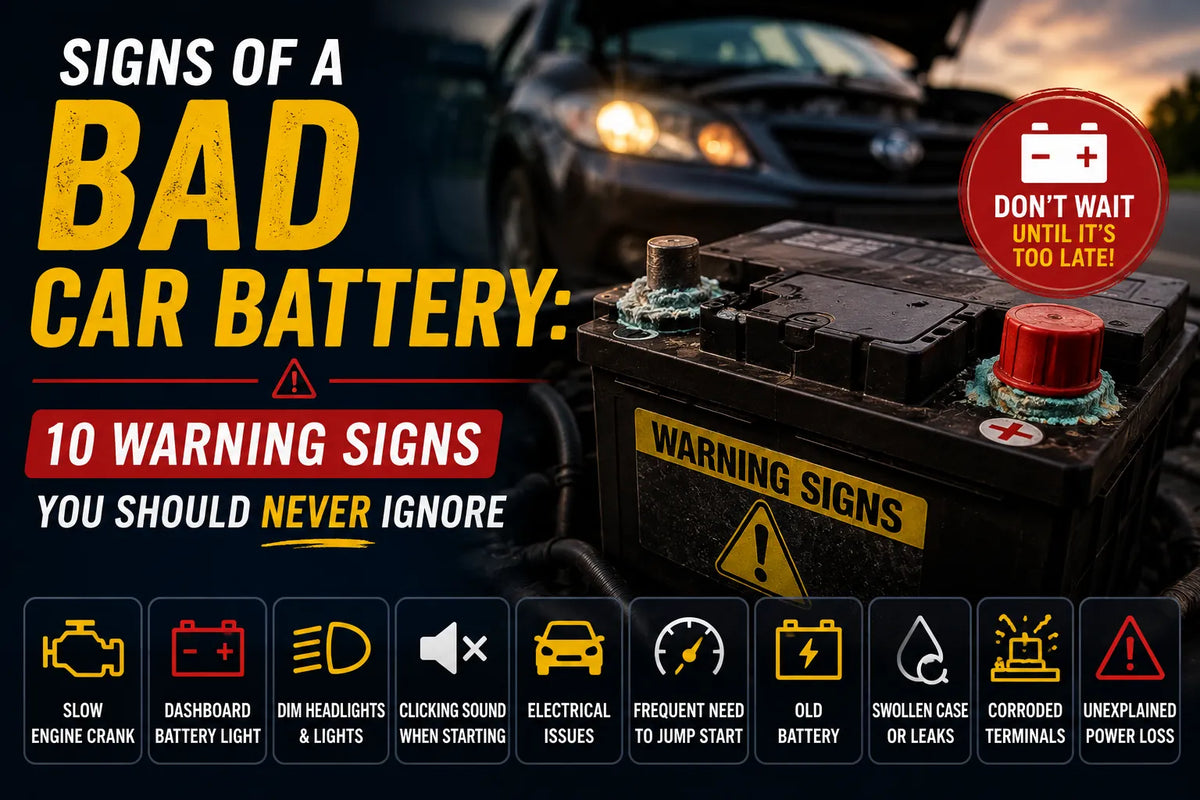
Why Battery Failure Matters
Few vehicle problems are as frustrating as turning the key and hearing nothing happen.
A failing battery rarely dies without warning.
In most cases, it provides several signs before complete failure occurs.
The challenge is recognizing those signs early enough to avoid being stranded.
Understanding battery failure symptoms can help you:
-
Prevent unexpected breakdowns
-
Avoid towing costs
-
Reduce repair expenses
-
Protect other electrical components
-
Replace the battery before complete failure
Let's examine the most common warning signs.
1. Slow Engine Cranking
One of the earliest and most obvious symptoms is slow cranking.
When you start the vehicle, the battery must deliver a large amount of power to the starter motor.
A healthy battery spins the engine quickly.
A weak battery causes:
-
Sluggish cranking
-
Hesitation during startup
-
Longer starting times
If the engine seems slower than usual when starting, the battery should be tested.
2. Frequent Jump Starts
Needing a jump start once may not be a concern.
Needing multiple jump starts within a short period usually indicates a problem.
Many drivers assume driving the vehicle after a jump start fully restores the battery.
Often it does not.
Repeated jump starts usually suggest:
-
Battery deterioration
-
Charging system issues
-
Electrical drains
A battery requiring regular assistance should be professionally tested.
3. Dashboard Battery Warning Light
Modern vehicles continuously monitor charging system performance.
If the battery warning light appears, it may indicate:
-
Battery problems
-
Alternator issues
-
Charging system faults
-
Wiring problems
Never ignore this warning light.
Many drivers continue operating the vehicle until complete electrical failure occurs.
Early diagnosis often prevents larger problems.
4. Dim Headlights
Headlights rely heavily on battery and charging system performance.
Symptoms include:
-
Dim lights at idle
-
Flickering headlights
-
Reduced brightness
-
Inconsistent lighting
Electrical performance often declines as battery condition deteriorates.
If lighting quality changes noticeably, battery testing is recommended.
5. Electrical Problems
Modern vehicles depend on electronics more than ever before.
A weak battery can affect:
-
Power windows
-
Touchscreens
-
Navigation systems
-
Audio systems
-
Heated seats
-
Electronic safety features
If multiple electrical systems begin behaving unpredictably, battery health should be investigated.
6. Clicking Sound When Starting
A rapid clicking sound often indicates insufficient battery power.
The starter solenoid engages repeatedly but lacks enough current to crank the engine.
Common causes include:
-
Low battery charge
-
Battery failure
-
Loose battery terminals
-
Corroded connections
This symptom should never be ignored.
Complete failure may be imminent.
7. Corrosion Around Battery Terminals
Battery corrosion is a common indicator of aging batteries.
Look for:
-
White deposits
-
Blue-green buildup
-
Powdery residue
Corrosion can:
-
Restrict electrical flow
-
Reduce charging efficiency
-
Cause starting problems
While corrosion alone does not guarantee battery failure, it often appears as batteries age.
Regular inspection and cleaning are important.
8. Battery Age Exceeds Five Years
Even if no symptoms are present, age matters.
Most automotive batteries last:
Typical Battery Lifespan
| Climate | Expected Lifespan |
|---|---|
| Moderate Climate | 4–5 Years |
| Hot Climate | 3–4 Years |
| Severe Conditions | 2–4 Years |
Heat is particularly damaging.
Many battery failures occur simply because the battery has reached the end of its service life.
If your battery is approaching five years old, testing should become part of routine maintenance.
9. Difficulty Starting in Cold Weather
Cold temperatures place enormous demands on batteries.
As temperatures drop:
-
Chemical activity slows
-
Available power decreases
-
Starting requirements increase
A battery that performs adequately in summer may fail during winter.
If your vehicle struggles during cold mornings, battery testing should be a priority.
10. Swollen or Distorted Battery Case
Physical battery damage is a serious warning sign.
Look for:
-
Bulging sides
-
Warped housing
-
Expanded case
Common causes include:
-
Overcharging
-
Excessive heat
-
Internal battery failure
A swollen battery should be replaced immediately.
Continuing to use a damaged battery can create safety risks.
Symptoms That Are Often Misdiagnosed
Not every starting problem is caused by a battery.
Common alternatives include:
Bad Alternator
A failing alternator prevents proper charging.
Symptoms often resemble battery failure.
Faulty Starter Motor
The starter may fail even when the battery is healthy.
Loose Battery Connections
Poor connections can prevent power delivery.
Parasitic Battery Drain
Electrical devices may discharge the battery while parked.
Examples include:
-
Dash cameras
-
Alarm systems
-
Faulty control modules
-
Interior lighting
Proper diagnosis is essential before replacing parts.
How to Test Your Battery
Testing is straightforward.
Method 1: Digital Multimeter
Check resting battery voltage.
Voltage Reference Chart
| Voltage | Battery Condition |
|---|---|
| 12.7V+ | Fully Charged |
| 12.6V | Healthy |
| 12.4V | Partially Charged |
| 12.2V | Low Charge |
| Below 12.0V | Significant Discharge |
Voltage testing provides a quick overview of battery condition.
Method 2: Load Testing
Load testing evaluates performance under demand.
This provides a more accurate picture of battery health than voltage testing alone.
Many professional workshops use dedicated battery testers for this reason.
What Causes Batteries to Fail?
Several factors contribute to battery deterioration.
Age
The most common cause.
Internal components naturally wear over time.
Extreme Temperatures
Both heat and cold reduce battery life.
Deep Discharge Cycles
Repeatedly allowing batteries to become fully discharged accelerates deterioration.
Short Trips
Frequent short journeys prevent complete recharging.
Charging System Problems
Faulty alternators can damage batteries over time.
How to Extend Battery Life
Simple maintenance can significantly increase battery lifespan.
Keep Terminals Clean
Remove corrosion regularly.
Test Battery Voltage Periodically
Identify problems before failure occurs.
Use a Smart Battery Charger
Maintain proper charge levels during storage.
Secure Battery Connections
Loose terminals create unnecessary strain.
Avoid Long Periods of Inactivity
Vehicles stored for extended periods benefit from battery maintainers.
When Should You Replace Your Battery?
Replacement is typically recommended when:
-
Battery is over five years old
-
Battery repeatedly loses charge
-
Load testing indicates poor performance
-
Starting reliability declines
-
Physical damage is present
Waiting for complete failure often results in inconvenience and additional costs.
Recommended Equipment for Battery Maintenance
Every vehicle owner should consider having:
-
Smart battery charger
-
Portable jump starter
-
Digital multimeter
-
Battery tester
-
Terminal cleaning brush
These tools make diagnosis and maintenance significantly easier.
Conclusion
Most battery failures provide warning signs before complete breakdown occurs.
Slow cranking, repeated jump starts, dim headlights, electrical issues, and battery warning lights should never be ignored.
Routine testing and preventative maintenance can dramatically reduce the risk of unexpected failure.
If your battery shows multiple warning signs, testing should be performed immediately to determine whether charging, repair, or replacement is required.
Frequently Asked Questions
How do I know if my battery is bad or just discharged?
A voltage test followed by a load test is the most reliable method for determining battery condition.
How long do car batteries usually last?
Most automotive batteries last between three and five years depending on climate and usage.
Can a bad battery damage my vehicle?
Indirectly, yes. Voltage instability can affect electronic systems and leave you stranded unexpectedly.
Is corrosion a sign that the battery is failing?
Not always, but excessive corrosion is commonly associated with aging batteries and poor connections.
Should I replace a battery before it completely fails?
In most cases, yes. Proactive replacement reduces the risk of breakdowns and towing expenses.