
August 24, 2026 · IRONVOLT
Intro: What a beginner needs for the home garage
If you’re starting out as a DIY mechanic or setting up a small home garage, you don’t need every specialist tool straight away. Focus on quality, versatility and storage. This guide walks through the core tools that cover the majority of routine jobs — small repairs, servicing, replacing parts and basic maintenance — and shows how a well-chosen kit can get you started quickly.
Essential tools for beginner mechanics
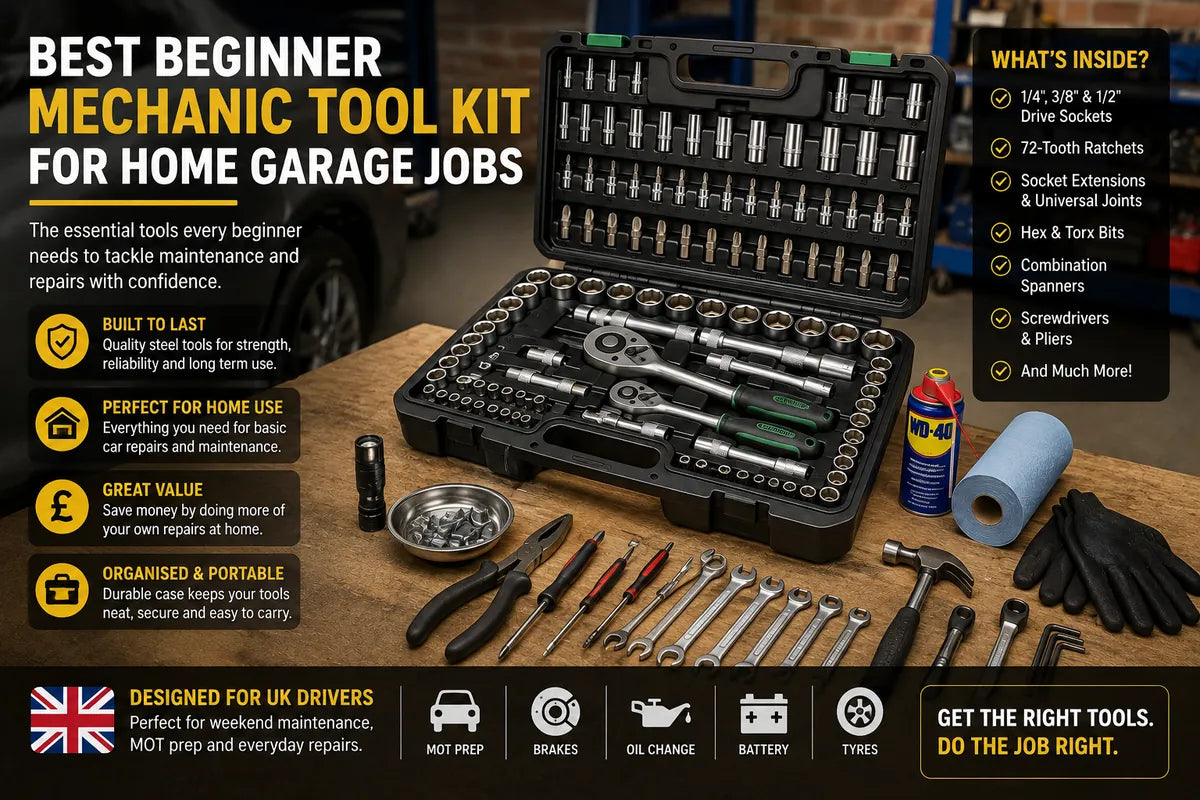
- Socket set with ratchets (1/4, 3/8 and 1/2 inch drives) – The most versatile item in your box. Useful for bolts and nuts on engines, wheels, and many fittings. A multi-drive set lets you tackle both small trim screws and larger fasteners.
- Combination spanners (metric) – A selection from 8mm to 19mm will cover most common sizes on modern cars and bikes.
- Screwdriver set (flat and Phillips plus bits) – For trim, panels, electronics and general jobs. Interchangeable bit sets save space.
- Pliers (slip-joint, long-nose, and locking) – For gripping, bending and removing clips and wires.
- Adjustable spanner – Handy when you don’t have the exact size spanner to hand.
- Hammer and rubber mallet – For gentle persuasion and heavier knocks when required.
- Feeler gauges, torque wrench (for lug nuts and torque-sensitive fastenings) – A torque wrench is recommended for wheel nuts and any bolts where specified torque is critical.
- Allen/Hex and Torx keys – Many components use these fasteners; a set of metric Hex and Torx bits is useful.
- Basic diagnostics and safety kit – A digital tyre pressure gauge, a decent torch, safety glasses, gloves and a first-aid kit.
Why a socket set is the core of a beginner kit
Socket sets give you reach, leverage and speed. With 1/4in, 3/8in and 1/2in drives you cover everything from small trim bolts to wheel nuts. Look for sets that include a neat carry case and a good range of metric sizes; a set that also contains screwdriver bits reduces the need for separate bit sets.
IRONVOLT kit examples
Two IRONVOLT products that fit well into a beginner’s garage are:
- IRONVOLT 218-Piece Metric Socket and Ratchet Set (1/4, 3/8 and 1/2 Inch Drive, Bits and Carry Case) – contains multiple drive sizes plus bits and a carry case, making it a comprehensive option for a first socket set.
- IRONVOLT Tool Set – a complementary set of hand tools that fills the gaps a socket set doesn’t cover, such as pliers, screwdrivers and spanners.
Sales and interaction data indicate these IRONVOLT kits are popular with buyers: the 218-piece socket set appears frequently in recent shop/TikTok activity (several orders and notable clicks across listings). See the evidence section below for the full import of this data.
How to choose the right first kit
- Decide scope: Are you working mainly on cars, bikes or general household machinery? Cars typically need a wider range of sockets and larger spanners.
- Metric vs Imperial: Most modern UK vehicles use metric fasteners — start with a metric set. Keep a small imperial set if you’ll work on older vehicles or equipment with imperial fittings.
- Quality and warranty: Buy tools from a known brand or supplier with clear returns and customer support. Tools that feel solid and have good finish and fit will last longer in a DIY environment.
- Storage: A compact, organised case saves time. Look for trays that keep sockets and bits labelled and in place.
- Future-proofing: A larger socket set (150–250 pieces) can be overkill but gives flexibility; a smaller curated set is lighter to carry and cheaper to start with. Choose based on how mobile you need to be.
Practical checklist: what to buy first
| Tool | Why it matters | Recommended sizes/items |
|---|---|---|
| Socket set + ratchets | Workhorse for bolts and nuts | 1/4, 3/8, 1/2 drive; common metric sockets 8–19mm |
| Combination spanners | When sockets won’t reach or for leverage | 8–19mm metric set |
| Screwdriver/bit set | Trim, panels, small fasteners | Phillips, slotted, Torx, Hex bits |
| Pliers | Gripping, bending, cutting wires | Slip-joint, long-nose, locking |
| Torque wrench | Essential for correctly tightened wheel nuts and torque-critical bolts | Range suitable for car lug nuts (typically 30–150 Nm) |
Maintenance and storage tips
- Wipe tools clean after use and store in their case to prevent rust.
- Keep sockets dry and periodically apply a light oil to moving parts (ratchets, adjustable spanners).
- Label or mark tools if you share the garage — it keeps everything returning to its proper place.
Safety and best practice
- Always use the correct tool for the job — using the wrong size increases the risk of rounding fasteners.
- Use eye protection and gloves when grinding, hammering or working under vehicles.
- If lifting a vehicle, use axle stands on a flat surface and never rely on a jack alone.
FAQ
Q: Should I buy a big multi-piece set or build a small kit?
A: If you want the flexibility to tackle many different jobs without buying individual pieces later, a larger multi-piece socket set is useful. If you’ll mostly do simple tasks at home, a focused, high-quality small set plus a few hand tools will be lighter and less costly.
Q: Do I need both metric and imperial tools?
A: Most modern European and Japanese vehicles use metric. Keep a small imperial set if you expect to work on older UK/US equipment, classic cars or some agricultural machinery.
Q: Is a torque wrench necessary for a beginner?
A: Yes for wheel nuts and any bolts with specified torque values. A basic, good-quality torque wrench will protect threads and prevent over-tightening.
Q: How do I know if a socket will fit my car?
A: Check the bolt head size (mm) or consult your vehicle manual. A common road-car range is 10–19mm for many exterior fastenings; a full metric socket set usually covers these sizes.
Q: Which IRONVOLT kit should I start with?
A: For many beginners, a combined approach works best: a comprehensive socket set (for example, a 1/4, 3/8 and 1/2 drive socket set with bits and a carry case) plus a complementary tool set containing spanners, screwdrivers and pliers. This covers the majority of routine home garage jobs.
Where to buy
If you’re ready to start building your home garage kit, browse the IRONVOLT range for socket sets and complementary hand tool sets at https://www.ironvolts.com. The site shows the full range and case options to suit a beginner’s needs.
Summary
Start with a good socket set (including 1/4, 3/8 and 1/2 drives) plus a small selection of combination spanners, screwdrivers, pliers and a torque wrench. Choose a kit that stores neatly and feels solid in use. That combination will cover most home garage jobs while you build skills and decide which specialist tools you need next.