
August 27, 2026 · IRONVOLT
Why the difference matters
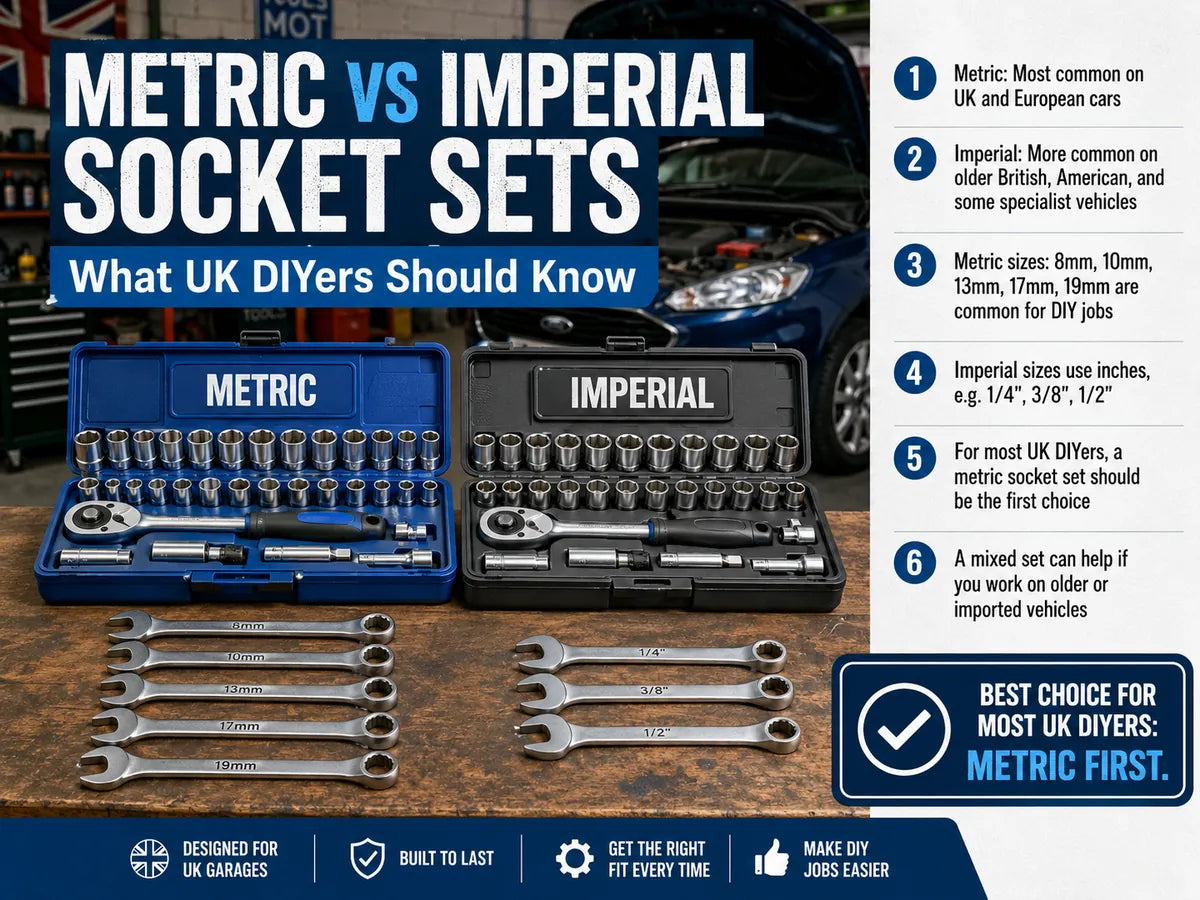
Sockets come in two measuring systems: metric (millimetres) and imperial (inches, often called SAE). In the UK most modern cars, bikes and household fixtures use metric fasteners, but you’ll still meet imperial sizes on older British machinery, some classic cars, and imported American kit. Picking the right set saves time, prevents rounding-off bolts and reduces the risk of tool damage.
Metric, imperial and Whitworth — what’s the deal?
- Metric (mm): The most common system in the UK today. Sizes are given in millimetres (eg. 8mm, 10mm, 13mm).
- Imperial / SAE (inches): Common on American vehicles and some older equipment. Sizes are in fractions of an inch (eg. 1/4", 3/8", 1/2").
- Whitworth: An older British standard still found on classic cars and vintage machinery; less common than metric but worth being aware of if you work on older vehicles.
Quick recommendation for UK DIYers
For most DIYers and trades in the UK, a metric socket set will cover the majority of jobs. If you frequently work on classic cars, older agricultural equipment or American imports, having a small imperial set (and possibly Whitworth bits) is sensible. Many people choose a comprehensive multi-drive kit so they’re prepared for both.
Practical kit to consider
The IRONVOLT 218-Piece Metric Socket and Ratchet Set (1/4, 3/8 and 1/2 inch drive, bits and carry case) is an example of a multi-drive kit that suits a range of jobs — it provides metric coverage across the common drive sizes and includes bits for additional versatility. Our stock data shows this set has been ordered multiple times and frequently features in social posts, indicating it’s a popular choice for general purpose use.
Common size cross-reference (approximate)
Note: imperial and metric sizes are not exact matches. Using the closest-size socket can work for temporary use but for best results choose the exact system where possible.
| Metric (mm) | Closest Imperial (fractional inch) | Typical use |
|---|---|---|
| 8mm | 5/16" (≈7.94mm) | Small bolts on bikes, trim clips |
| 10mm | 3/8" (≈9.53mm) | Very common on cars and general kit |
| 12mm | 15/32" (≈11.91mm) | Brake and engine components |
| 13mm | 1/2" (≈12.70mm) | Common underbonnet and suspension bolts |
| 17mm | 11/16" (≈17.46mm) | Larger wheel and chassis fasteners |
Which drive sizes should you own?
- 1/4" drive – For small fasteners and tight spaces; handy for automotive trim, electronics and light work.
- 3/8" drive – The most versatile everyday drive for general car maintenance and most DIY tasks.
- 1/2" drive – For larger bolts and higher torque tasks (suspension, wheel nuts, heavier mechanical work).
Multi-drive kits (1/4, 3/8 and 1/2) cover the majority of DIY and garage tasks, which is why they’re a common recommendation.
Buying tips
- Choose a set that clearly marks sizes on each socket for quick identification.
- Look for a mix of shallow and deep sockets. Deep sockets are helpful for long bolts and spark plugs.
- Consider a set with a hard carry case or organiser trays to keep sockets in order and prevent chasing sizes on the workshop floor.
- If you use impact tools, purchase sockets rated for impact use – standard chrome sockets are not the same as impact sockets (check the product description).
- Add common extras: extensions, universal joints and a selection of bits to deal with non-standard fasteners.
Maintenance and safe use
- Use the correct socket size — a sloppy fit damages both fastener and tool.
- Keep sockets clean and lightly oiled to prevent rust. Store them dry in their case.
- Don’t use a ratchet as a hammer; avoid side loading sockets to reduce cracking or rounding.
FAQ
-
Do I need both metric and imperial sets?
Not always. If you mainly work on modern UK vehicles and household jobs, metric is usually sufficient. If you work on classic cars, American imports or older machinery, a small imperial set is useful. Many people buy a comprehensive mixed kit to be prepared.
-
Can I use an imperial socket on a metric bolt (or vice versa)?
Sometimes a close imperial size will fit, but this is only a stopgap. For a secure fit and to avoid rounding fasteners, use the correct system when possible.
-
Are some sockets better quality than others because of the measurement system?
No — quality depends on the material, heat treatment and manufacturing tolerances, not whether a socket is metric or imperial.
-
What should I look for in a multi-drive set?
Make sure the set covers 1/4", 3/8" and 1/2" drives, includes common metric sizes, a few imperial sizes if needed, and comes with extensions and bits for added flexibility.
Final thoughts
For most UK DIYers and trades, a well-chosen metric set covers the majority of jobs. If you want to avoid surprises, a mixed 1/4", 3/8" and 1/2" drive kit with both metric sizes and a handful of imperial sockets is a practical, future-proof option. The IRONVOLT 218-piece kit offers that flexibility for general garage and home use and is a common pick among customers looking for an all-in-one solution.
Explore the IRONVOLT range and find the kit that suits your garage at IRONVOLT.