
June 20, 2026 · Marco Groessler
Why Socket Size Matters
A socket set is only useful when the socket, drive size and ratchet match the job in front of you. Using the wrong size can round off fasteners, waste time and make simple maintenance feel harder than it needs to be.
This guide explains the basics so you can choose the right socket more confidently for garage, vehicle and workshop tasks.
Metric vs Imperial Sockets
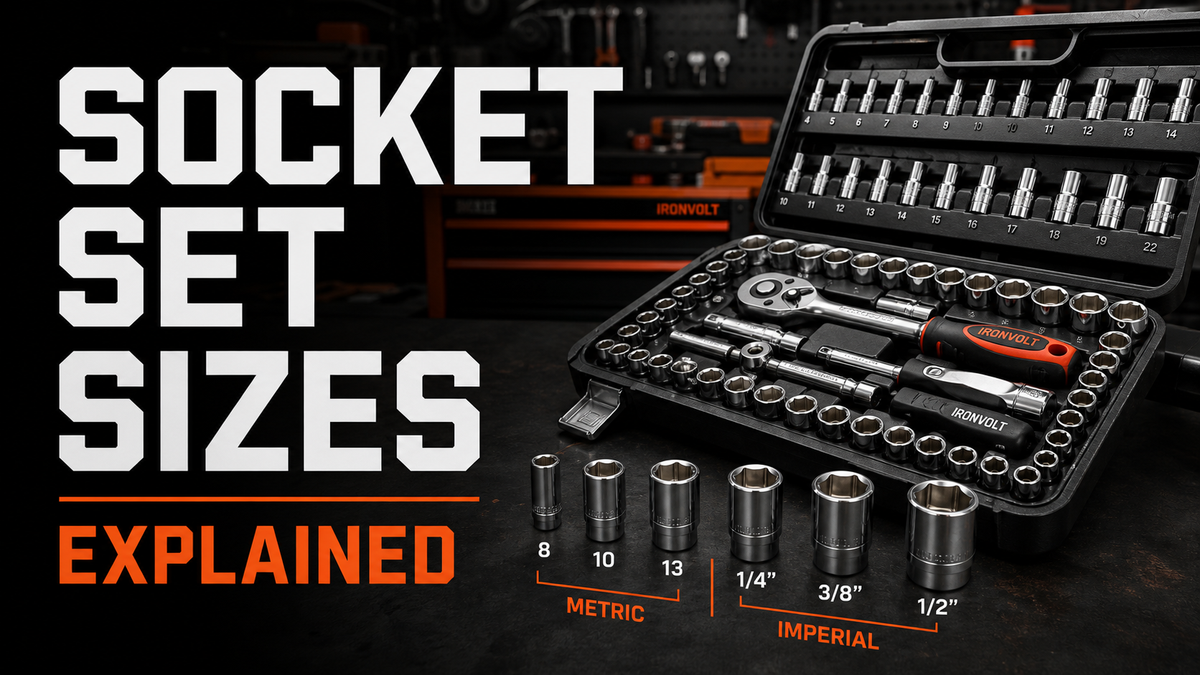
Most modern vehicles and household equipment use metric fasteners, usually measured in millimetres. Common examples include 8mm, 10mm, 13mm, 17mm and 19mm sockets.
Imperial sockets are measured in fractions of an inch, such as 1/4", 3/8" and 1/2". These are still useful on older vehicles, imported equipment, machinery and mixed workshop jobs.
If you are unsure, test the socket by hand first. It should sit fully over the fastener with minimal movement before you apply pressure.
Understanding Drive Sizes
The drive size is the square connection between the ratchet and socket. The three most common sizes are:
- 1/4" drive — best for smaller fasteners, tight spaces and lighter work.
- 3/8" drive — a strong all-round option for general vehicle and garage jobs.
- 1/2" drive — better for larger fasteners where more leverage is needed.
For most home garage users, a set that includes several drive sizes gives more flexibility than relying on one ratchet for everything.
Deep vs Shallow Sockets
Shallow sockets are compact and useful when access is limited. Deep sockets reach over longer bolts or protruding threads, making them useful for wheel nuts, brackets and awkward fixings.
A practical kit should include both, especially if you work on vehicles or equipment where fastener access changes from job to job.
How to Choose the Right Socket
- Match the measurement first. Use metric for metric fasteners and imperial for imperial fasteners.
- Check the fit before force. If the socket feels loose, stop and try the next size.
- Use the right drive size. Small drive for control, larger drive for leverage.
- Use extensions carefully. Extensions help with reach, but too much angle can reduce control.
- Keep the set organised. A missing 10mm socket always seems to disappear at the worst moment.
Common Mistakes to Avoid
Do not force a near-fit socket onto a fastener. That is how bolts get rounded. Avoid using damaged sockets, and do not use standard chrome sockets with impact tools unless they are specifically rated for that use.
When a fastener is stuck, apply steady pressure and use the right tool rather than rushing. Control matters more than brute force.
Final Advice
A good socket set should make jobs simpler, not more confusing. Look for clear size markings, a sensible range of metric and imperial sockets, useful extensions and an organised case that keeps everything easy to find.
For everyday garage and repair work, choosing the correct socket is one of the easiest ways to work cleaner, faster and with less frustration.